Share This Article
Why Natural Daylight Is Essential in Hospital Design
Daylight: Essential for Patient Healing
Author: Harry McQue (see footer for details)
Revised Publication date: 19 Mar 2022
This article continues from my previous post on designing hospitals as healing environments (insert actual link), where I explored how thoughtful architecture contributes to patient recovery and staff wellbeing.
Here, I delve deeper into the importance of natural daylight in hospital design, and what architects, engineers and planners should consider during the early stages of healthcare facility design.
🏥 The Proven Benefits of Daylight in Hospitals
Extensive research confirms that access to daylight significantly:
-
Accelerates patient recovery
-
Enhances staff morale, performance and retention
-
Contributes to overall wellbeing for patients, staff and visitors
While this isn’t a new concept, its implementation has been sporadic-often discussed more than practised, until recent years.
🏗️ Modern Hospital Design Trends
Contemporary hospital designs aim to provide a positive, holistic experience. Designers now integrate:
-
High glass atrium entrances
-
Natural light with artificial lighting
-
Use of colour, art and open space
-
Cafés, restaurants and retail shops
Despite these enhancements, daylight must go beyond public spaces and into clinical and patient-focused zones.
🌇 Optimising Natural Light Through Smart Design
Daylight is a free, renewable source of both light and heat. Its intelligent use can:
-
Reduce reliance on artificial lighting and HVAC systems
-
Lower operational costs
-
Minimise environmental impact and carbon footprint
To maximise these benefits, several key design factors must be considered:
1. Building Depth and Layout
The physical footprint of a hospital dictates how far daylight can penetrate into the interior.
-
Wide or deep buildings result in darker core zones.
-
If working with an existing deep structure, consider:
-
Skylights
-
Light wells
-
Clerestory windows
-
For new builds, design layouts so that short-use or non-patient rooms (e.g. toilets, storage, changing areas) are placed deeper in the core, preserving daylight for clinical and patient-facing areas.
2. Building Orientation and Sun Path
The orientation of the building plays a pivotal role. Designers should:
-
Analyse sun paths across seasons
-
Use a sun angle calculator to determine:
-
Light availability at different times of day
-
Heat gain and loss for efficient temperature control
-
This informs decisions on:
-
Ventilation
-
Glazing
-
Heating and cooling loads
-
Shading devices
3. Window Placement and Glazing Strategy
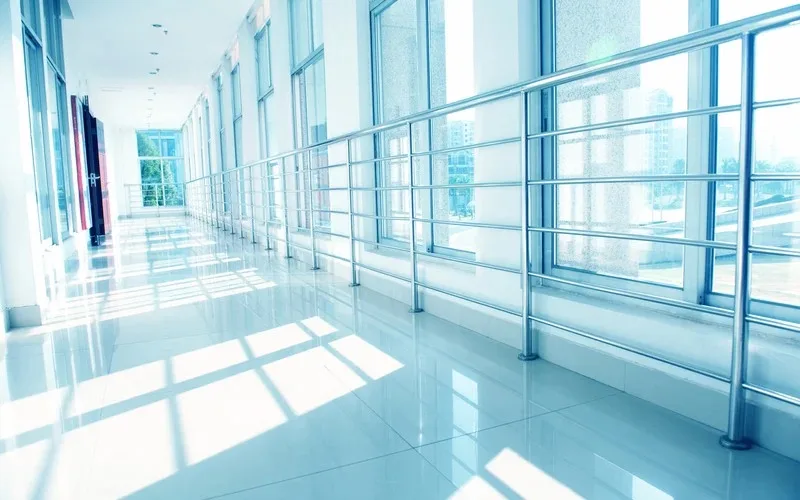
To bring daylight into staff and inpatient areas, position them along external walls. Then:
-
Use internal glazing on partition walls to let light spill into corridors and adjoining rooms.
-
Factor in:
-
Patient privacy
-
Ability to darken rooms for rest
-
Minimising glare
-
Thermal comfort
-
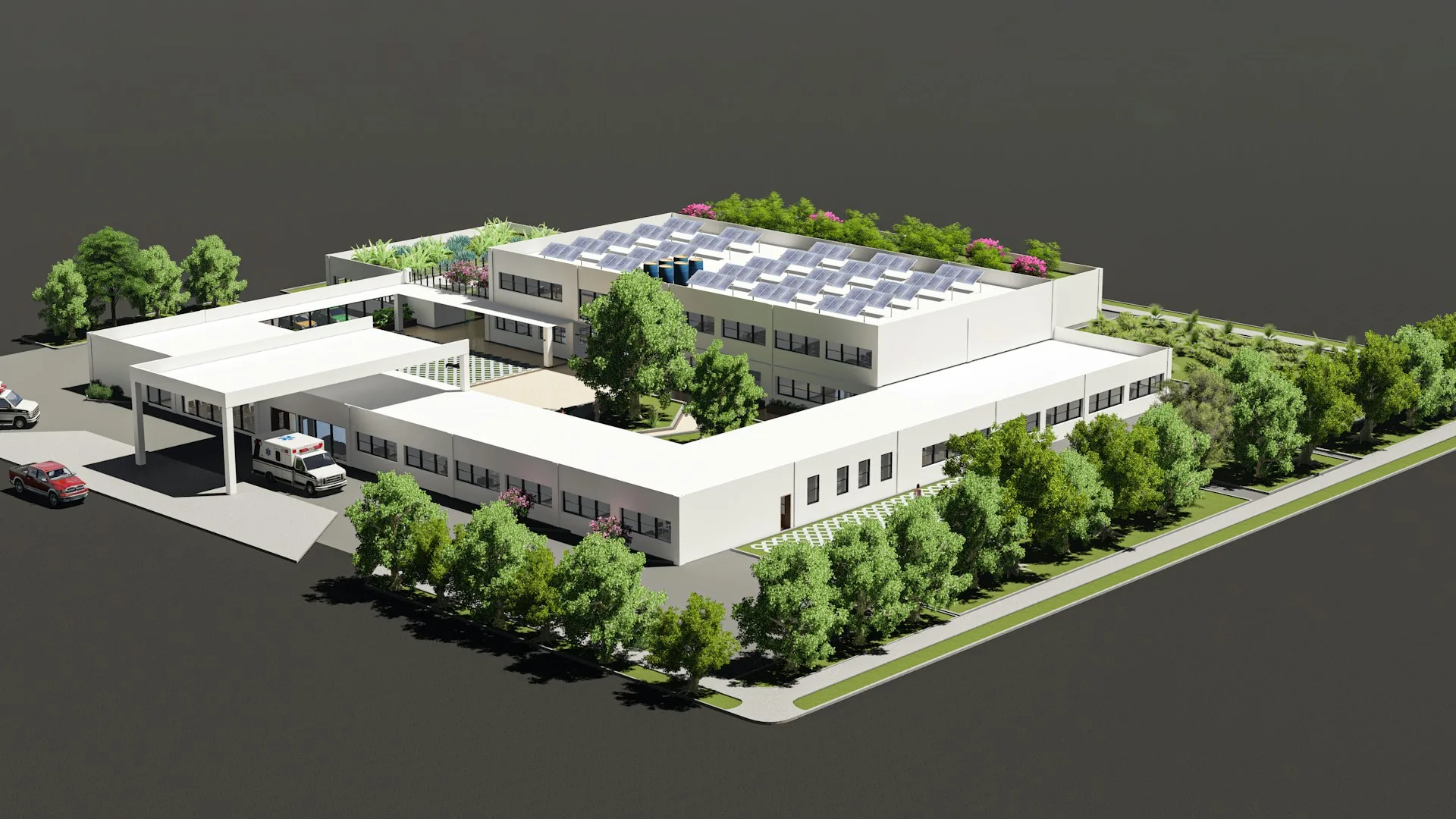
Where feasible, consider courtyards or narrower building plans to maximise external wall exposure.
💷 Cost Savings and Environmental Impact
Incorporating natural daylight into hospital design isn’t just good for people, it makes financial sense too. Here’s how:
📉 Operational Cost Reductions
-
Lower energy bills due to reduced reliance on artificial lighting during the day
-
Reduced heating costs in colder months via passive solar gain
-
Less cooling demand when daylight design includes proper shading and insulation
🌱 Environmental and Regulatory Benefits
-
Contributes to BREEAM, WELL or similar sustainability certifications
-
Helps meet NHS net-zero goals and climate-related targets
-
Reduces the facility’s carbon footprint significantly
🔄 Return on Investment
Although daylight-focused design may involve a higher initial investment for advanced glazing or light-control systems-it yields:
-
Lower lifecycle costs
-
Reduced system maintenance (compared to complex artificial lighting systems)
-
Greater long-term value and future-proofing
🔗 Supporting Research & Resources
NHS England also outlines the role of daylight and passive design in achieving its Net Zero Buildings goals.
✅ Design Priorities: A Recap
A well-designed hospital must strike a balance. It should be:
-
Patient-centred
-
Clinically functional
-
Compliant with local health and safety regulations
-
Sustainable in design and operation
-
Aesthetically thoughtful – with flair used judiciously
📣 Share Your Thoughts
We’re keen to hear how your healthcare facility is embracing daylight and flexible design. Do you have a case study or success story to share?
Contact us here (insert actual link) — we’d love to feature your input in a future article.
We would like to hear your ideas on the design process and any stories you would like to share about how your workplace is influenced by the same via the Contact form.
About the Author:
Harry McQue is a hospital Design & Equipment Manager with Post Graduate degrees in business management and information technology. Harry has 20+ years of international experience ranging from working on hospital projects in Dubai (Middle East) to over £1 billion hospital projects in the UK & Europe. You can benefit from his experience at: hospital-designs.com. If you have current or upcoming projects, big or small or topics that you would like his advice on, you can get in touch via the Contact form.
Use permitted only with prior authorisation. Please contact for permission or guidance.