Share This Article
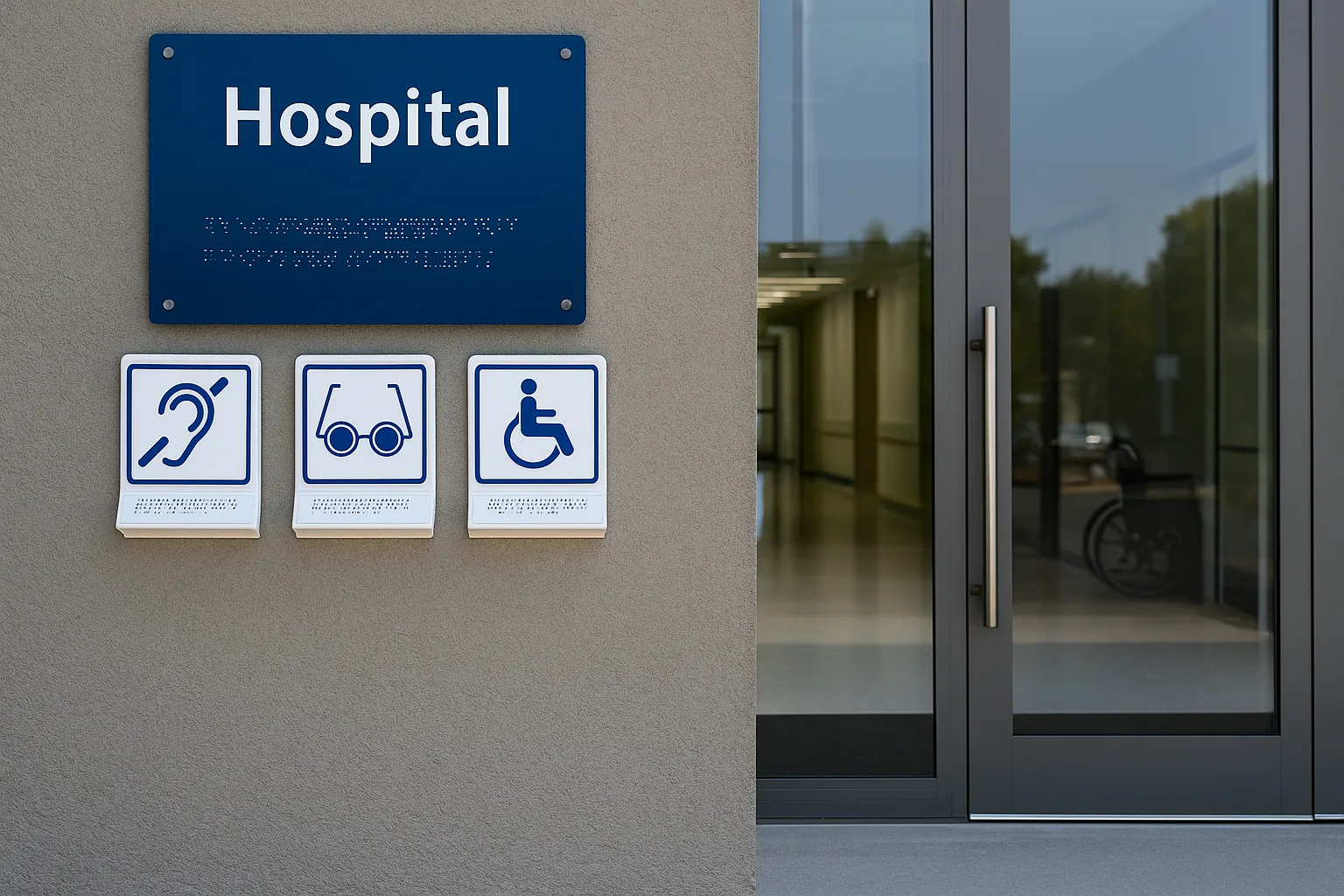
Way Finding & Signage in Hospitals & Clinics
The Importance of Wayfinding and Signage in Hospitals and Clinics
Author: Harry McQue (see footer for details)
Revised Publication date: 03 May 2023
Navigating hospitals presents significant challenges for many visitors. However, effective wayfinding systems can dramatically reduce this stress. Not only do they guide people through complex environments, but they also create a more welcoming atmosphere. Particularly for vulnerable groups such as elderly patients or those with disabilities, clear signage proves essential.
Research consistently shows that navigation difficulties affect most first-time visitors. In fact, nearly 60% report wayfinding problems in large hospitals. Consequently, stress levels rise sharply when people become disoriented. Therefore, good signage creates calmer experiences for everyone involved.
Key benefits include:
• Reduced anxiety before medical procedures
• Faster emergency response times
• Improved accessibility for disabled visitors
• Enhanced experience for non-English speakers
• Furthermore, it lowers staff workload for giving directions
Developing a Comprehensive Wayfinding Strategy
According to the NHS Wayfinding Guidance, successful systems require careful planning. First, they must combine multiple complementary solutions. Second, they should address different user needs effectively. Finally, they need regular evaluation and updates.
Modern approaches typically incorporate three key layers:
Building Design
• Clear sightlines to important areas
• Additionally, distinctive landmarks at decision points
• Logical floor numbering systems
• Similarly, consistent colour schemes
Physical Signage
• Directional signs at regular intervals
• Moreover, tactile elements for blind users
• High-contrast colour combinations
• Likewise, multilingual symbols
Digital Tools
• Hospital navigation apps
• In addition, interactive information kiosks
• Real-time updates
• Similarly, accessible mobile features
Modern Signage Solutions in Healthcare
Technology is transforming hospital wayfinding in remarkable ways. Whereas traditional signs were once the only option, digital solutions now complement them effectively. As a result, they create more seamless navigation experiences.
Leading hospitals currently implement:
• Dynamic display screens
• Voice-assisted navigation
• Mobile wayfinding apps
• Additionally, multilingual content systems
• Sustainable materials
These innovations deliver measurable benefits. For instance, one NHS trust saw appointment delays drop by 27%. Similarly, another reduced missed appointments significantly.
Key advantages include:
• Real-time updates
• Personalised routing
• Moreover, accessibility features
• Environmental benefits
• Consequently, cost savings
Accessible and Inclusive Design
As outlined in the NHS Identity Guidelines, about 20% of visitors require special assistance. For this reason, inclusive design benefits everyone.
Essential features should incorporate:
• Large, clear text
• High colour contrast
• Additionally, tactile guidance
• Simple pictograms
• Similarly, consistent layouts
These elements not only meet legal requirements but also create more welcoming spaces. As a result, patients feel more comfortable when navigation is intuitive.
How Effective Wayfinding Improves Patient Experience
Quality navigation systems deliver substantial value. Not only do they benefit patients, but they also help staff significantly.
Documented improvements include:
• 31% fewer late arrivals
• 22% less staff interruption
• Additionally, higher satisfaction scores
• Better space utilisation
• Consequently, reduced complaints
Conversely, poor systems have negative effects. They increase stress and frustration significantly. Moreover, emergency responses slow down. Therefore, staff waste valuable time giving directions.
Ultimately, investing in wayfinding pays multiple dividends. It improves care quality while generating savings. Patients immediately notice the difference good signage makes. Similarly, staff workflows become more efficient.
We would like to hear your ideas on the design process and any stories you would like to share about how your workplace is influenced by the same via the Contact form.
About the Author:
Harry McQue is a hospital Design & Equipment Manager with Post Graduate degrees in business management and information technology. Harry has 20+ years of international experience ranging from working on hospital projects in Dubai (Middle East) to over £1 billion hospital projects in the UK & Europe. You can benefit from his experience at: hospital-designs.com. If you have current or upcoming projects, big or small or topics that you would like his advice on, you can get in touch via the Contact form.
Use permitted only with prior authorisation. Please contact for permission or guidance.