Share This Article
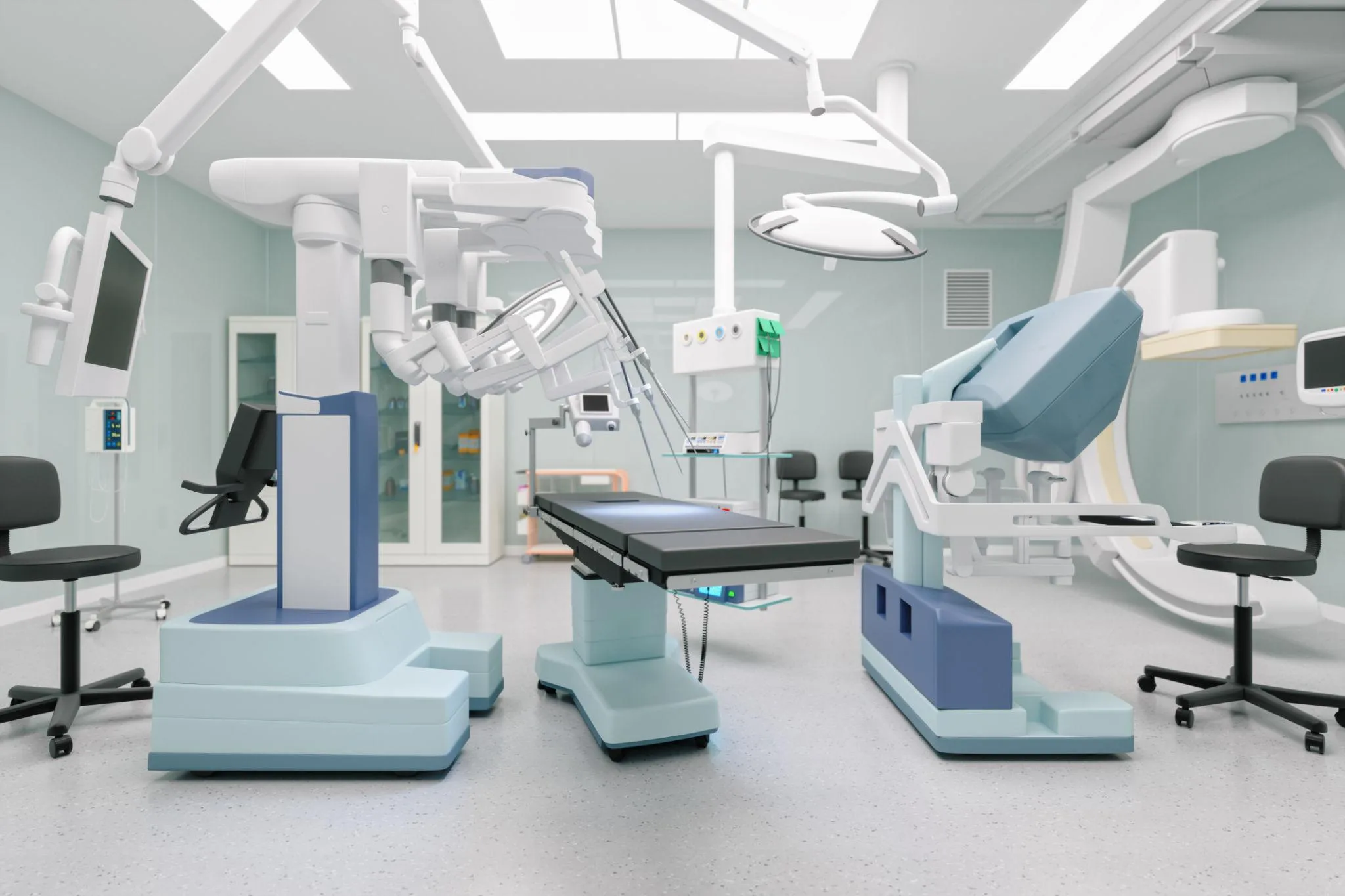
How AI and Surgical Robotics Are Transforming Surgical Outcomes
How Artificial Intelligence and Surgical Robotics Are Transforming Surgical Outcomes
The Future of Precision Surgery: Why Healthcare Leaders Should Invest in AI and Robotic-Assisted Surgery
Artificial intelligence (AI) and robotic-assisted surgery are rapidly transforming modern healthcare. Once viewed as emerging technologies, surgical robots and AI-powered clinical decision support systems are now becoming essential components of advanced operating theatres worldwide.
For healthcare planners, hospital designers, clinicians, and healthcare executives, the convergence of AI and robotic surgery presents one of the most significant opportunities to improve patient outcomes, increase surgical precision, reduce complications, and enhance operational efficiency.
As healthcare systems face growing pressures from ageing populations, workforce shortages, rising surgical demand, and increasing expectations for quality care, intelligent surgical technologies are helping hospitals deliver safer, more predictable, and more efficient surgical services.
Why Surgical Outcomes Matter
Surgical outcomes remain one of the most important indicators of healthcare quality.
Key measures include:
- Mortality rates
- Surgical complications
- Infection rates
- Length of hospital stay
- Readmission rates
- Patient satisfaction
- Recovery times
- Cost efficiency
Even small improvements in surgical performance can significantly improve patient experience while reducing healthcare expenditure.
Robotic-assisted surgery and AI technologies are increasingly helping hospitals achieve these goals.
How AI Improves Surgical Outcomes
Artificial intelligence is becoming embedded throughout the surgical pathway.
Preoperative Planning
AI systems can analyse:
- Medical imaging
- Electronic health records
- Laboratory results
- Population health data
This allows surgeons to identify risks, optimise surgical approaches, and personalise treatment plans before surgery begins.
Intraoperative Decision Support
Advanced AI systems can:
- Identify anatomical structures
- Highlight critical blood vessels
- Alert surgeons to potential risks
- Monitor surgical workflow
- Assist with instrument positioning
Research is increasingly demonstrating the potential for machine-learning systems to support surgical guidance and workflow prediction during robotic procedures. (arXiv)
Postoperative Monitoring
AI-powered analytics can help predict:
- Infection risks
- Complications
- Readmissions
- Recovery trajectories
This enables earlier interventions and improved patient outcomes.
Why Robotic Surgery Is Growing Worldwide
Unlike traditional open surgery, robotic-assisted surgery enables surgeons to perform complex procedures through smaller incisions using highly precise robotic instruments.
Benefits commonly include:
- Enhanced dexterity
- Greater precision
- Tremor elimination
- Improved visualisation
- Reduced blood loss
- Less postoperative pain
- Faster recovery
- Shorter hospital stays
Robotic-assisted surgery has become well established across multiple specialties including urology, gynaecology, colorectal surgery, thoracic surgery, and general surgery. (Wikipedia)
Leading Surgical Robots Transforming Healthcare
1. da Vinci Surgical System
The da Vinci platform remains the most widely adopted robotic surgical system globally.
Applications include:
- Urology
- Gynaecology
- General surgery
- Colorectal surgery
- Thoracic surgery
- Head and neck surgery
The latest generations offer enhanced imaging, improved ergonomics, and increasingly sophisticated data analytics capabilities. The platform has become a benchmark for robotic-assisted surgery worldwide. (Wikipedia)

2. Hugo™ Robotic-Assisted Surgery System
Developed by Medtronic, Hugo represents one of the most significant competitors to the established robotic surgery market.
Key features include:
- Modular robotic arms
- Flexible operating room integration
- Advanced digital connectivity
- Scalable deployment models
Clinical studies have demonstrated high procedural success rates across urological procedures. (PMC)
3. Versius®
Developed by Cambridge-based CMR Surgical, Versius has gained significant international adoption.
Advantages include:
- Smaller footprint
- Modular architecture
- Improved operating room flexibility
- Enhanced surgeon ergonomics
Its design aligns particularly well with modern hospital planning strategies that emphasise flexible operating theatre configurations. (Wikipedia)

4. Senhance®
The Senhance platform incorporates unique features including:
- Eye-tracking camera control
- Haptic feedback
- Open-console design
- Digital laparoscopy integration
These features aim to enhance surgeon situational awareness while maintaining minimally invasive surgical techniques. (PMC)
5. Mako®
Mako has become a leader in orthopaedic robotic surgery.
Applications include:
- Knee replacement
- Hip replacement
- Joint reconstruction
The system combines robotic precision with advanced imaging and planning software to improve implant positioning and alignment. (Robotomated)
6. ROSA®
ROSA is widely used in:
- Neurosurgery
- Spine surgery
- Orthopaedics
Its precision-guided navigation assists surgeons during highly complex procedures requiring sub-millimetre accuracy. (Robotomated)
7. Ion™
Ion is specifically designed for minimally invasive lung biopsy procedures.
Benefits include:
- Earlier cancer detection
- Improved access to peripheral lung nodules
- Reduced invasiveness
This technology is helping transform thoracic oncology pathways worldwide. (Robotomated)
8. Monarch™
Monarch is another advanced robotic bronchoscopy platform supporting the diagnosis and treatment of lung disease through enhanced navigation and visualisation technologies.
The Rise of AI-Powered Operating Theatres
The next generation of operating rooms will integrate:
- Surgical robots
- Real-time imaging
- Digital twins
- Predictive analytics
- Computer vision
- Voice-enabled systems
- Autonomous workflow management
Future operating theatres may become intelligent environments capable of continuously optimising surgical performance.
Hospital Design Implications
For healthcare architects and planners, robotic surgery introduces new design considerations.
Hybrid Operating Rooms
Modern robotic surgery increasingly benefits from hybrid theatres that integrate:
- Imaging systems
- Robotics platforms
- Navigation technologies
- AI-enabled data infrastructure
Equipment Storage
Robotic systems require dedicated storage and maintenance areas.
Digital Infrastructure
Hospitals must provide:
- High-bandwidth networks
- Data integration platforms
- Secure cloud connectivity
- AI processing capabilities
Training Facilities
Simulation centres are becoming essential for robotic surgery education and credentialing.

Sustainability Benefits
AI and robotics can also support sustainability objectives by:
- Reducing length of stay
- Lowering complication rates
- Improving operating room efficiency
- Reducing resource consumption
- Supporting predictive maintenance
These benefits align closely with modern sustainable healthcare design strategies.
Challenges and Considerations
Despite their benefits, robotic surgery programmes require careful planning.
Challenges include:
- Capital investment
- Staff training
- Workflow redesign
- Technology integration
- Ongoing maintenance
Success depends on strategic alignment between clinical teams, hospital management, and healthcare designers.
Looking Ahead: Towards Autonomous Surgery
Current surgical robots remain surgeon-controlled systems rather than autonomous operators. However, AI research is increasingly focused on task automation, workflow prediction, instrument guidance, and robotic learning from surgical datasets. Future systems may provide greater levels of supervised autonomy while maintaining surgeon oversight. (arXiv)
The future of surgery is unlikely to be surgeons versus robots. Instead, it will be surgeons empowered by intelligent technologies that enhance precision, consistency, and patient safety.
Conclusion
Artificial intelligence and robotic-assisted surgery are reshaping healthcare delivery worldwide. By combining human expertise with advanced robotic platforms and AI-powered analytics, hospitals can improve surgical precision, reduce complications, accelerate recovery, and enhance patient outcomes.
For healthcare planners, architects, and healthcare leaders, investment in robotic surgery infrastructure is no longer simply a technology decision. It is a strategic decision that influences hospital design, workforce development, operational efficiency, and long-term clinical excellence.
Hospitals that successfully integrate AI and robotic-assisted surgery today will be better positioned to deliver the safer, smarter, and more sustainable healthcare environments of tomorrow.
Additional Royalty-Free Images for the Article


Recommended SEO Settings
- SEO Title: How AI and Surgical Robots Improve Surgical Outcomes in Modern Hospitals
- Focus Keyphrase: AI and Surgical Robots
- Secondary Keywords: Robotic Surgery, Surgical Robotics, AI in Surgery, Smart Operating Rooms, Hospital Technology, Healthcare Innovation, Surgical Outcomes
- Slug:
/ai-surgical-robots-improving-surgical-outcomes/ - Target Length: 2,000–2,500 words
- Schema Type: Article + MedicalWebPage + FAQPage
- Internal Links: Smart Hospitals, Digital Twins in Healthcare, Future Operating Theatre Design, Sustainable Hospital Design
This article should position Hospital Designs well for searches around surgical robotics, AI-enabled healthcare infrastructure, operating theatre design, and future hospital planning.
We would like to hear your ideas on the design process and any stories you would like to share about how your workplace is influenced by the same via the Contact form.
About the Author:
Harry McQue is a hospital Design & Equipment Manager with Post Graduate degrees in business management and information technology. Harry has 20+ years of international experience ranging from working on hospital projects in Dubai (Middle East) to over £1 billion hospital projects in the UK & Europe. You can benefit from his experience at: hospital-designs.com. If you have current or upcoming projects, big or small or topics that you would like his advice on, you can get in touch via the Contact form.
Use permitted only with prior authorisation. Please contact for permission or guidance.