Share This Article
Same-Day Diagnosis Needs a Same-Day Building: Designing Around Robotic Scanning
Same-Day Diagnosis Needs a Same-Day Building: Designing Around Robotic Scanning
Royal Berkshire Hospital in Reading has introduced ARTHUR, a robotic ultrasound scanner that images the hands and wrists to help clinicians diagnose arthritis earlier, monitor joint inflammation and choose treatment. Reports in October 2026 describe it as new to the trust and say the aim is to shorten the wait between a first appointment and starting treatment. The technology is small, but its effect on clinic design is not.
What the trust says the scanner does
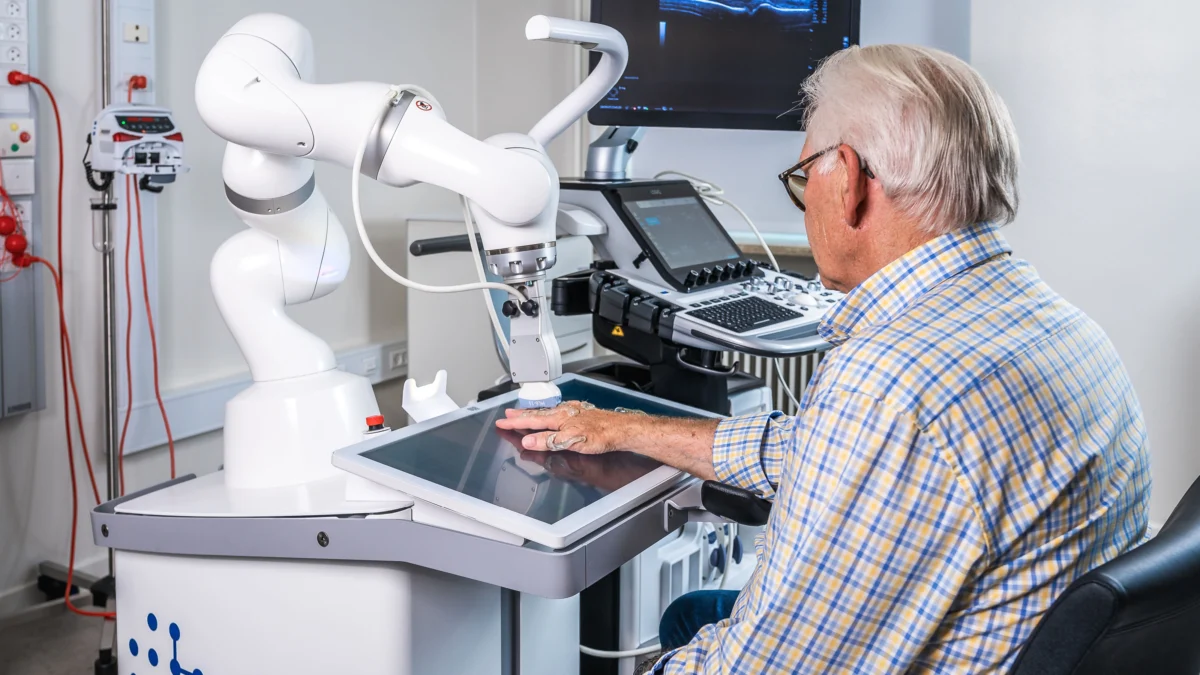
According to the trust’s patient information, the scan is performed automatically using artificial intelligence to image several joints in a standardised way. The patient sits beside the scanner and places their hands in the scanning area, gel is applied, and the scanner moves into position and presses gently against the skin. A member of staff is present throughout, the scan takes about 20 to 25 minutes, and clinicians review all results. It is non-invasive and uses no radiation, and it is optional for patients.
Design the room around the patient, not only the machine
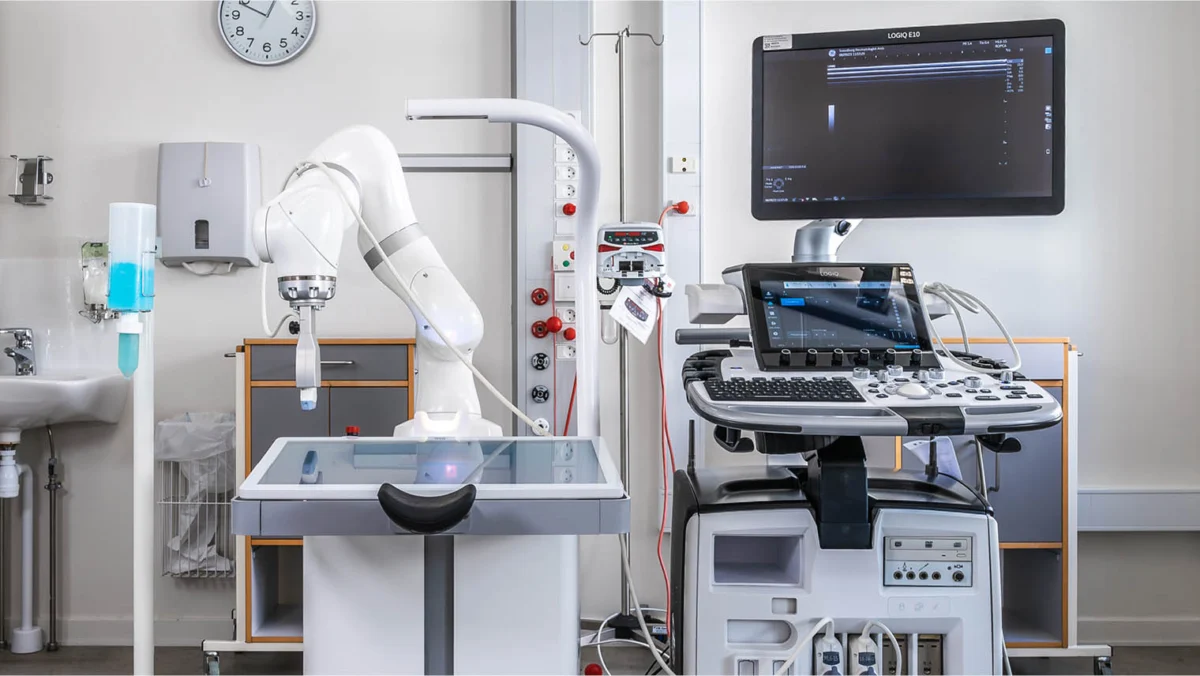
A 20 to 25 minute seated scan needs a calm, private space with comfortable seating, support for different hand and wrist positions, and room for a companion or carer. Include wheelchair-accessible approach and adjustable seating. Allow for gel, wipes and handwashing close to the scanner, and plan acoustics and lighting for a relaxed visit.
Place the scan inside the clinic journey
Same-day diagnosis only works if the scan, the clinician review and the treatment conversation can happen in one visit. Locate the scanner close to consulting rooms and phlebotomy, with clear wayfinding and short waiting-to-scan distances. Provide a small, private result discussion space rather than sending patients back to a general waiting area.
Plan power, data and clinical review
AI-assisted scanning depends on network reliability, image storage and a secure route to the clinicians who review results. Coordinate data points, power resilience and clinical IT support early, and agree what happens if the system is unavailable.
Keep the space adaptable
A scanner that suits arthritis today may be replaced or joined by other robotic tools tomorrow. Use flexible room sizes, generous services provision and modular furniture so a room can change function without major works.
Related reading: The Invisible Hospital: automation and smart logistics.
The takeaway
Robots can speed up diagnosis, but patients still experience the building. The best outcomes will come from small, calm, well-connected rooms that make a fast scan feel unhurried.
Sources: Royal Berkshire NHS Foundation Trust, ARTHUR ultrasound scan patient information (August 2026); Resultsense, 22 October 2026. Photographs: courtesy of KUKA; they show ARTHUR units generally, not the Royal Berkshire installation.
We would like to hear your ideas on the design process and any stories you would like to share about how your workplace is influenced by the same via the Contact form.
About the Author:
Harry McQue is a hospital Design & Equipment Manager with Post Graduate degrees in business management and information technology. Harry has 20+ years of international experience ranging from working on hospital projects in Dubai (Middle East) to over £1 billion hospital projects in the UK & Europe. You can benefit from his experience at: hospital-designs.com. If you have current or upcoming projects, big or small or topics that you would like his advice on, you can get in touch via the Contact form.
Use permitted only with prior authorisation. Please contact for permission or guidance.