Share This Article
Ultrafast and Adaptive Linacs: What New Radiotherapy Platforms Mean for Vaults, Workflow and Planning
Ultrafast and Adaptive Linacs: What New Radiotherapy Platforms Mean for Vaults, Workflow and Planning
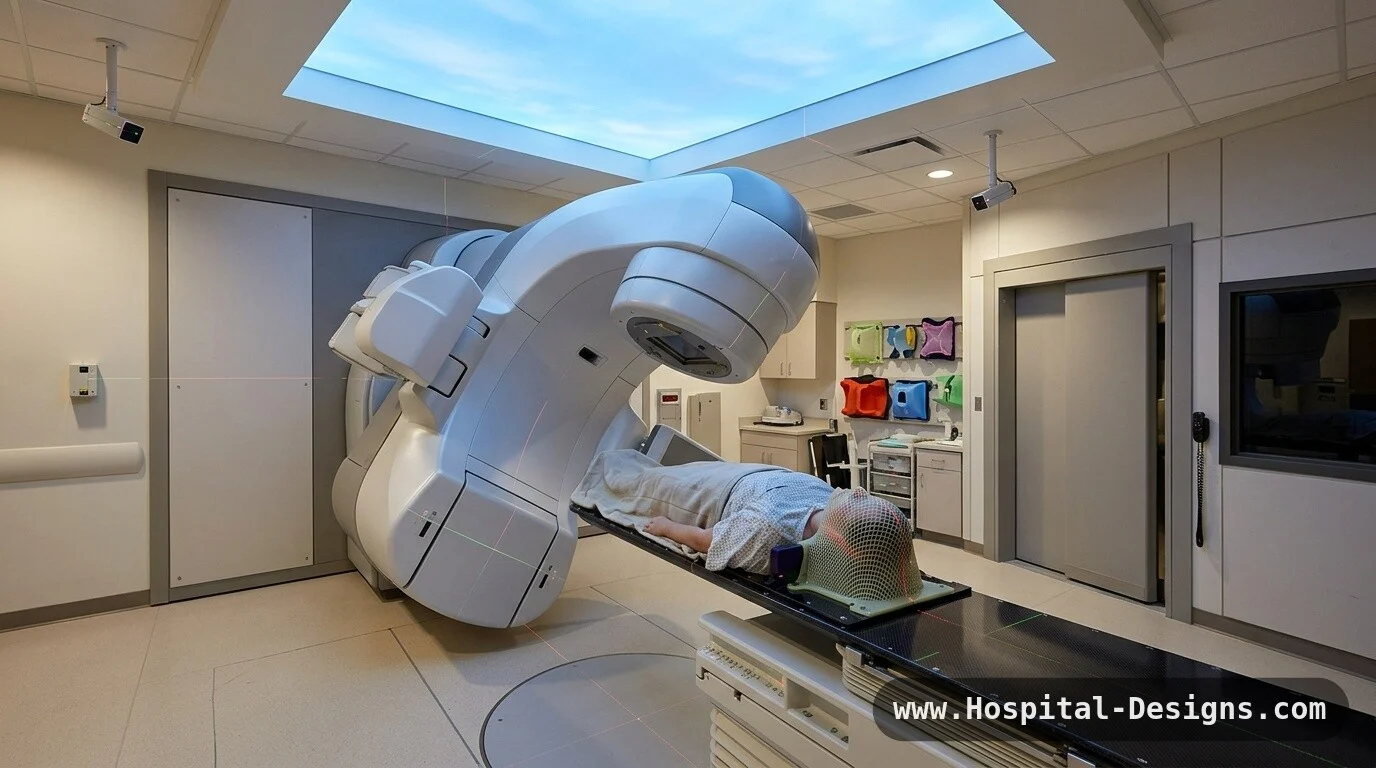
Radiotherapy is getting faster and more adaptive. Faster delivery changes how many patients a machine treats, and adaptive workflows change how long patients and staff spend in the room and in planning. Both feed back into the building: workload for shielding, space for imaging and planning, and the support rooms around the bunker.
Planning principle: a faster machine is not automatically a smaller project. Re-run the physics inputs, and plan the workflow around the machine.
1. Three Trends Affecting Design
- Speed: shorter beam-on times and shorter table times raise potential patient throughput.
- Adaptive therapy: online adaptation (MR-guided, CT-guided or CBCT-based) adds imaging, contouring and planning time at the console while the patient waits, or offline in the department.
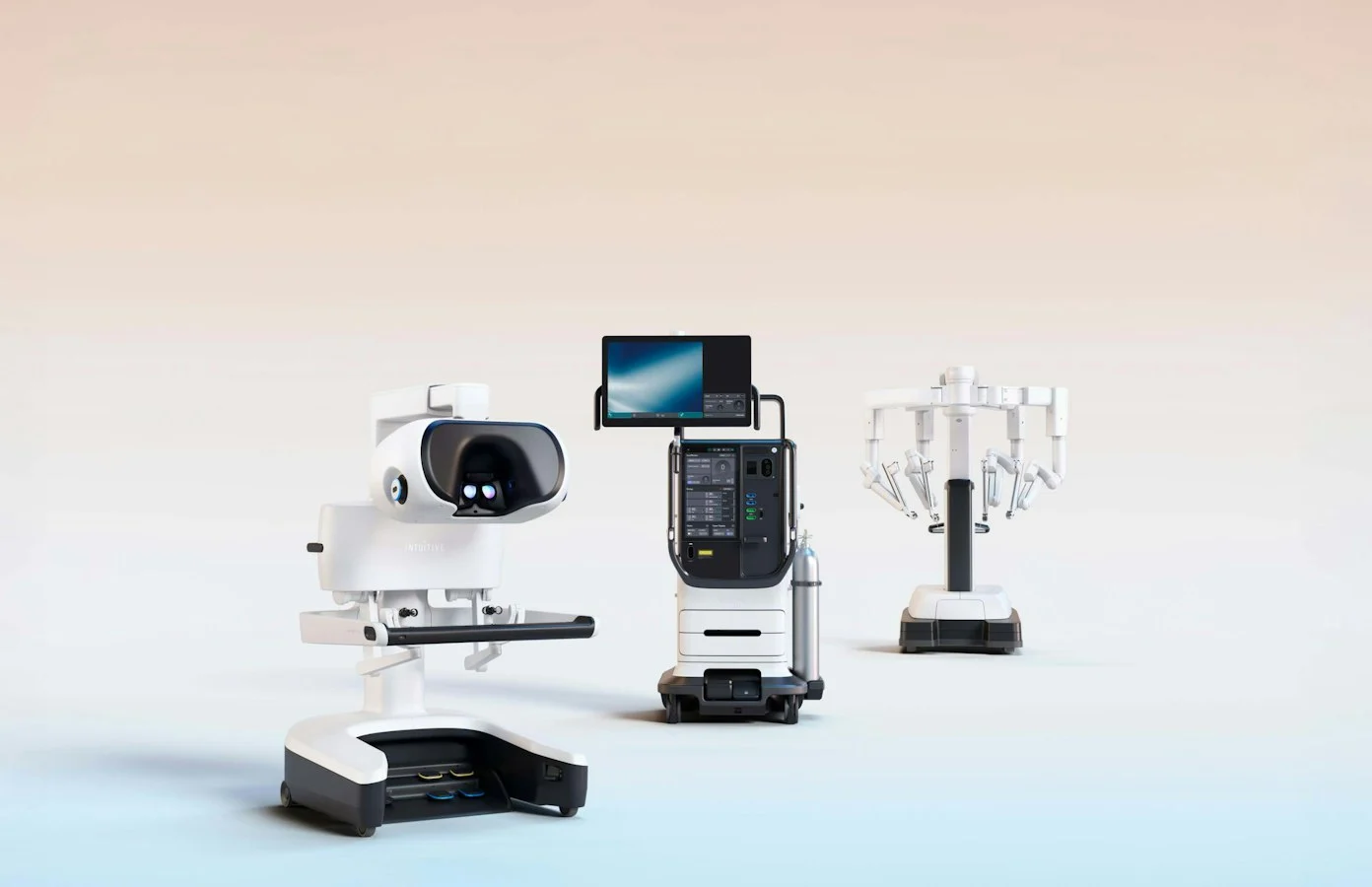
- Compact and upright systems: new geometries aim to reduce room size and cost for some centres. Confirm the claims for the exact model.
2. Effect on the Shielding Design
| Input | Why it can change | Action |
|---|---|---|
| Workload | More patients per day and more fractions with hypofractionation. | Reassess weekly workload with the physicist for the busiest realistic year. |
| Technique mix | High-MU techniques raise leakage workload. | Use the manufacturer’s technique data and the physicist’s assumptions. |
| Energy | New energy settings may be offered, including flattening-filter-free modes. | Confirm energies, neutron production and maze or door implications. |
| Imaging dose | Large on-board imaging panels and frequent imaging. | Include imaging workload in the assessment where relevant. |
See our full guide to linear accelerator bunker design for the shielding method.
3. Workflow and Space Around the Bunker
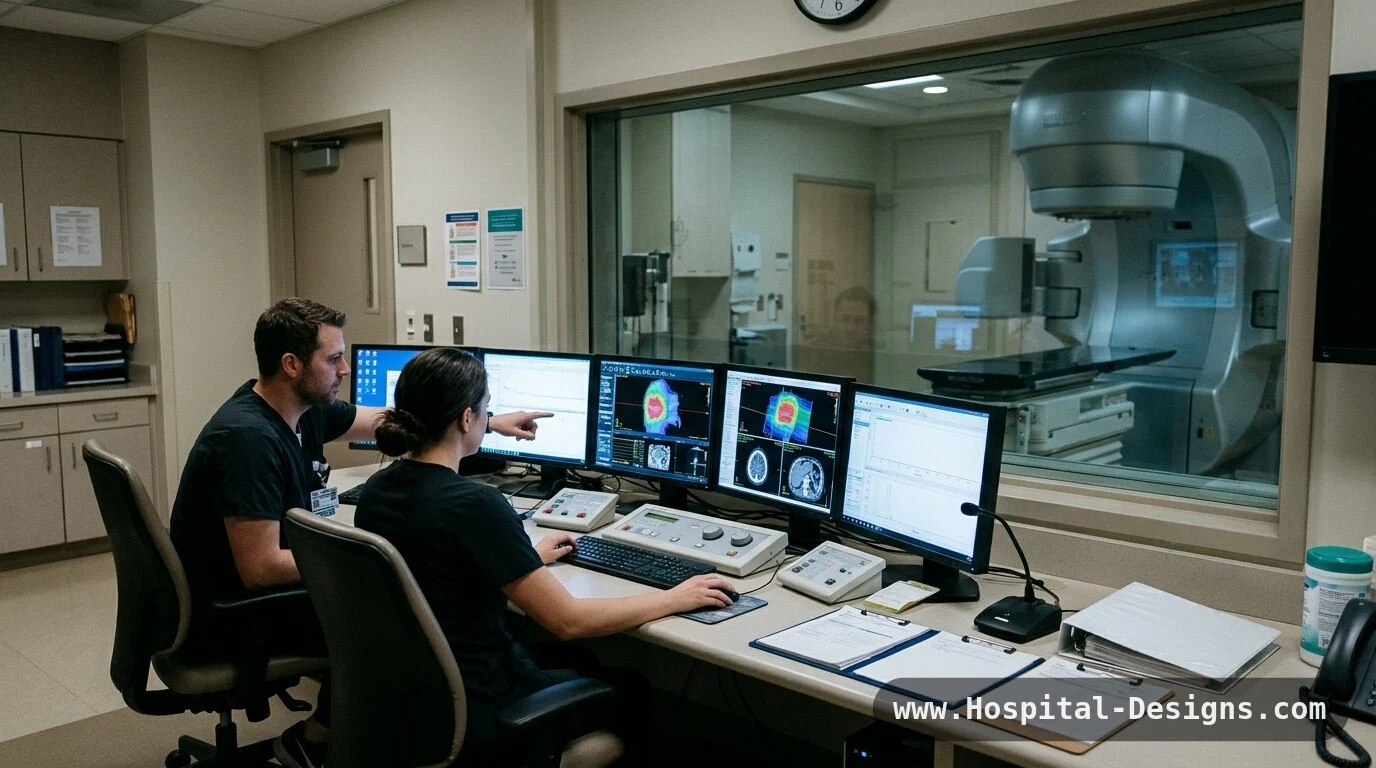
- Console and control area: adaptive workflows need more staff at the console, more screens and room for physician and physicist review.
- Waiting and changing: faster tables mean quicker patient turnover, so changing cubicles, waiting areas and escorts must keep pace.
- Planning and QA space: dosimetry, plan QA and physics rooms near the machines.
- Immobilisation and mould room: still needed, and sometimes busier with stereotactic work.
- Patient transport: trolley access and a recovery area for patients who arrive unwell.
4. MR-Guided Systems
MR-guided radiotherapy combines MRI and a linac, so the room needs both radiation shielding and MR safety measures: magnetic zoning, RF shielding, quench venting and a magnetic interference survey. Plan with both an RPA or physicist and an MR safety expert. See our MRI suite design guide.
5. Services and Resilience
- Stable power and cooling per the manufacturer, with a UPS strategy. See our essential power design guide.
- Resilient chilled water for the machine, since a cooling failure stops treatment.
- Data capacity for imaging, adaptive planning and remote support, agreed with IT.
- Delivery route and replacement strategy for a very heavy machine and removable shielding block.
6. Common Mistakes
- Using the old machine’s workload for a faster new platform.
- Planning the vault but not the console, waiting and planning space.
- Ignoring the MR safety side of an MR-linac.
- Treating a work-in-progress or not-yet-cleared product as available.
- No upgrade path, so the next machine needs new walls.
7. Review Checklist
- Is the product available and cleared in your market?
- Have workload, technique mix and energy been reviewed by the physicist or RPA?
- Are console, waiting, planning and QA spaces sized for the new workflow?
- For MR-linacs, has an MR safety expert reviewed the room?
- Are power, cooling, data and delivery route confirmed?
Conclusion
Ultrafast and adaptive radiotherapy is changing how patients are treated, and the building must keep up. Treat each new platform as a new set of physics inputs and workflow demands, and design the whole department, not only the vault.
Key References and Further Reading
- Siemens Healthineers — Accela press release.
- AuntMinnie — Elekta expands adaptive radiotherapy portfolio.
- Physics World — Leo Cancer Care upright photon therapy.
- NCRP — Report No. 151.
Editorial note: This article is an independent design overview. Product information comes from public announcements and manufacturer statements and may change. Shielding must be designed and verified by a qualified radiation protection expert.
We would like to hear your ideas on the design process and any stories you would like to share about how your workplace is influenced by the same via the Contact form.
About the Author:
Harry McQue is a hospital Design & Equipment Manager with Post Graduate degrees in business management and information technology. Harry has 20+ years of international experience ranging from working on hospital projects in Dubai (Middle East) to over £1 billion hospital projects in the UK & Europe. You can benefit from his experience at: hospital-designs.com. If you have current or upcoming projects, big or small or topics that you would like his advice on, you can get in touch via the Contact form.
Use permitted only with prior authorisation. Please contact for permission or guidance.