Share This Article
da Vinci 5: Force Feedback, Specifications, Digital Tools and Buyer’s Checklist
da Vinci 5: Force Feedback, Specifications, Digital Tools and Buyer’s Checklist
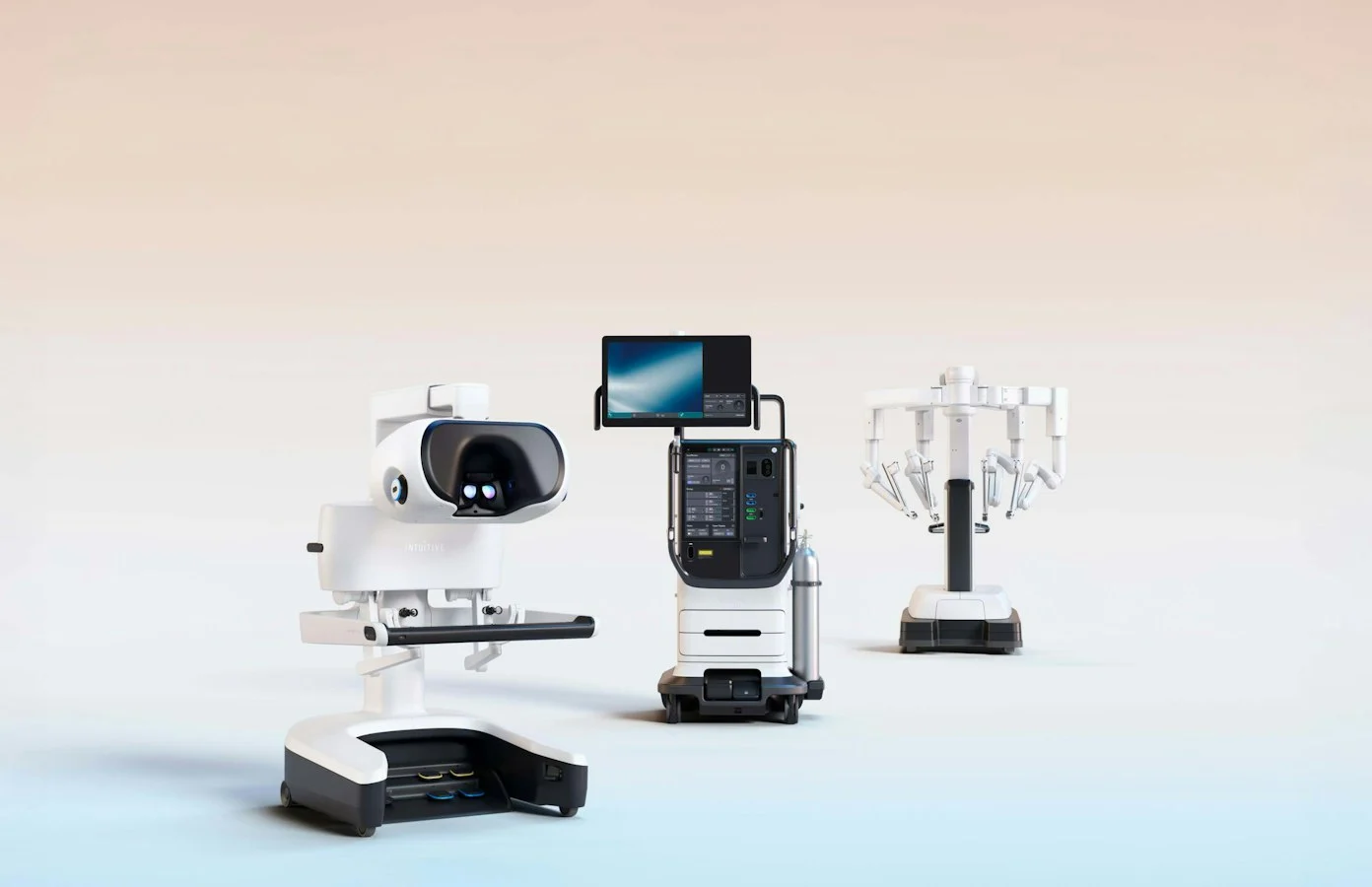
da Vinci 5 (model IS5000) is Intuitive’s fifth-generation multiport robotic surgical system. Its headline additions are force-feedback instruments that tell the surgeon how much force is being applied to tissue, far more computing power than the da Vinci Xi, and a redesigned immersive console. If you are comparing robotic surgery systems, da Vinci 5 vs Xi or surgical robot cost for hospitals, these are the published facts.
1. Published Specifications and Claims
| Area | Published detail (Intuitive) |
|---|---|
| Force feedback | |
| Force on tissue | Up to 43% less force in preclinical data (high vs off retraction settings) |
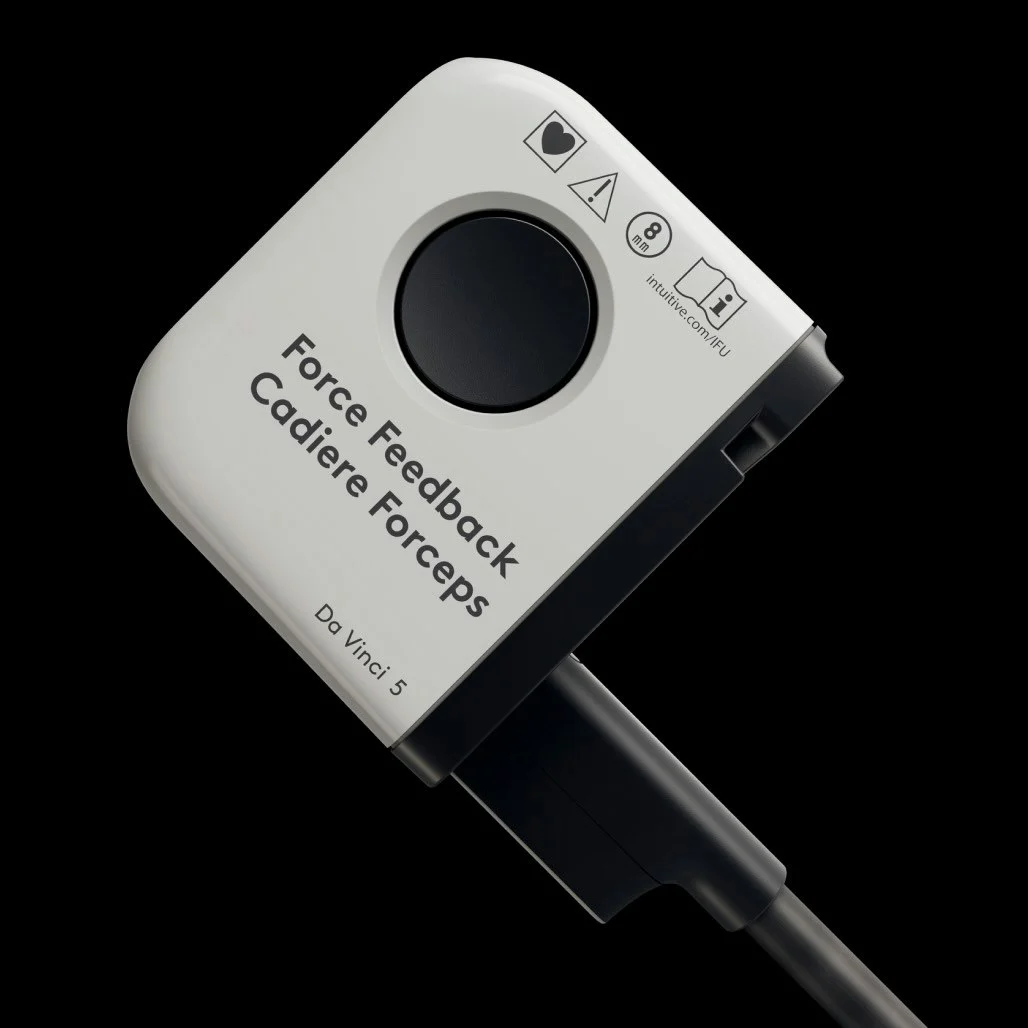
| Instruments | Six force-feedback-enabled instruments; sensitivity settings customisable |
| Contraindication | The force-feedback needle driver is contraindicated in hysterectomy and myomectomy |
| Computing and design | |
| Computing power | “10,000x” that of da Vinci Xi (Intuitive claim) |
| Design innovations | More than 150 |
| Vision | |
| Resolution | 4x the pixels of prior systems |
| Fluorescence | 785 nm Firefly imaging |
| Endoscope | Tip heater to reduce fogging |
| Console and workflow | |
| Console | Immersive console with curved armrest, touchpad and wider ergonomic range; head-in menu |
| Setup | Simplified setup, guided tool change, task automation, universal user interface across all three components |
| Speed claim | About 2x faster procedure time vs Xi, from a qualitative analysis of 53 first-in-human cases |
| Digital tools (My Intuitive+) | |
| Telepresence | Real-time case observation and mentoring |
| Case Insights | AI analysis of system data, kinematics and video |
| SimNow 2 | More than 65 simulation exercises assessed with the GEARS scale |
| Indications | |
| Procedures | Urologic, general laparoscopic, gynaecologic laparoscopic and general thoracoscopic; adults only |
| Not published on the page | Port count, dimensions, weight, connectivity specification, clearance numbers, force-sensing range |
2. da Vinci 5 vs Competitors: Quick Grid
| Criterion | da Vinci 5 | Medtronic Hugo | J&J Ottava |
|---|---|---|---|
| Architecture | Cart-based multiport | Up to four independent arm carts, open console | Four arms built into the operating table |
| US indications | Urologic, general, gynaecologic, thoracoscopic | Urologic (Dec 2025); general and gynae submitted | 10 general-surgery procedures (De Novo, July 2026) |
| Force feedback | Yes, six instruments | Not stated in sources reviewed | Not stated in sources reviewed |
See the full side-by-side in our four-way surgical robot comparison (draft).
3. Where to Get the Official Specifications
- Intuitive da Vinci 5 page
- Intuitive manuals library (user and technical manuals)
- Intuitive safety and indications
- Installation guide for cart sizes, weights, power and room layout: request from Intuitive.
4. Buyer’s Checklist
- Which instruments and procedures are cleared in your country?
- Instrument life, per-procedure cost and service contract terms.
- Room size, ceiling height and cable routing for the console and carts.
- Training pathway, simulation access and proctoring.
- Data, telepresence and cybersecurity arrangements.
5. Related Equipment and Search Terms
Robotic programmes also buy laparoscopic towers and 4K endoscopes, surgical energy platforms, robotic instruments and drapes, surgical simulators, operating tables, OR integration systems, surgical smoke evacuation and surgical lights. Buyers typically search robotic surgery equipment, robotic surgical instruments and surgical robot training simulators.
Conclusion
Evaluate da Vinci 5 on installed-base evidence, lifetime cost and clearance in your market. Force feedback is a promising feature, but the 43% figure is preclinical and the 2x speed figure comes from a qualitative analysis of 53 cases. Ask for published clinical data before treating them as differentiators.
Sources, Brochures and Further Reading
Editorial note: Independent overview of public sources. Images are credited to their owners. Confirm all figures with the manufacturer. Not clinical advice.
We would like to hear your ideas on the design process and any stories you would like to share about how your workplace is influenced by the same via the Contact form.
About the Author:
Harry McQue is a hospital Design & Equipment Manager with Post Graduate degrees in business management and information technology. Harry has 20+ years of international experience ranging from working on hospital projects in Dubai (Middle East) to over £1 billion hospital projects in the UK & Europe. You can benefit from his experience at: hospital-designs.com. If you have current or upcoming projects, big or small or topics that you would like his advice on, you can get in touch via the Contact form.
Use permitted only with prior authorisation. Please contact for permission or guidance.