Share This Article
Compact Proton Therapy: MEVION S250-FIT Specifications, Vault Fit and First Clinical Use
Compact Proton Therapy: MEVION S250-FIT Specifications, Vault Fit and First Clinical Use
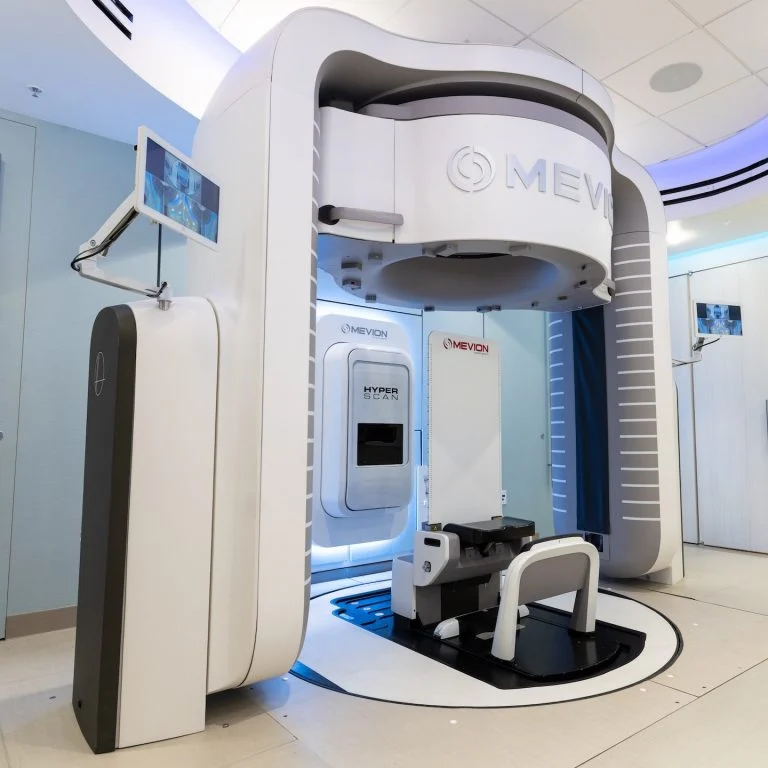
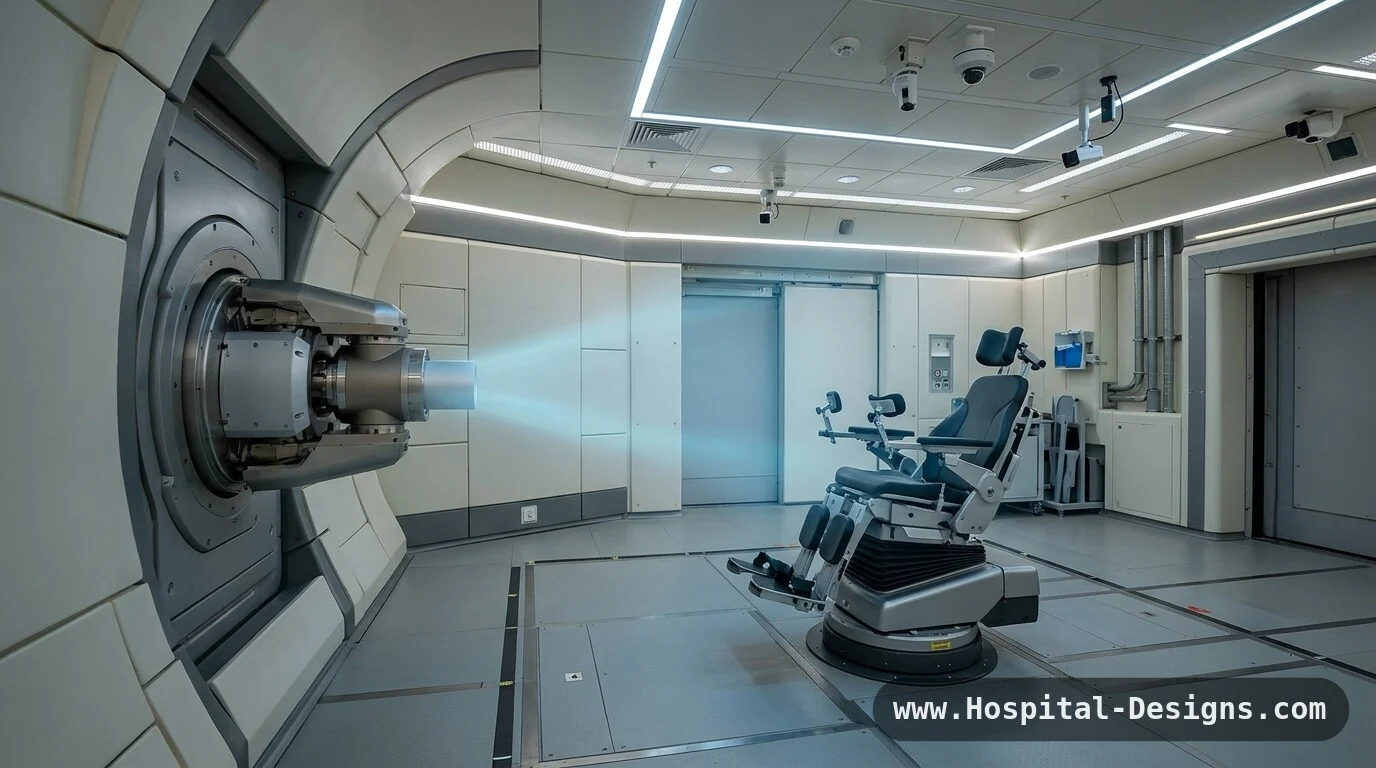
Conventional proton therapy needs a purpose-built building: a multi-storey rotating gantry, a large cyclotron and thick concrete shielding. The MEVION S250-FIT is aimed at a different cost and space point. It is a compact, fixed-beam, gantry-free proton therapy system that Mevion says fits into an existing conventional linac vault. In April 2026 Stanford Medicine opened a facility built on this idea, and on 4 June 2026 it treated its first patient. If you are researching compact proton therapy systems, single-room proton therapy cost or proton therapy vs linac, this is the system most planners are now watching.
1. Technical Specifications (as published)
| Parameter | Published detail | Source |
|---|---|---|
| System type | Compact single-room proton therapy; fixed beam, no rotating gantry. | Mevion press release |
| Accelerator | Described as the world’s smallest self-shielded proton accelerator. | Mevion product page |
| Beam delivery | HYPERSCAN pencil beam scanning for intensity-modulated proton therapy (IMPT). | Mevion product page |
| Room requirement | Footprint said to match a conventional radiation therapy vault; no dedicated bunker required. Business Wire reports a standard 110 m² (1,200 sq ft) linac vault. | Business Wire, ESTRO 2026 |
| Imaging | Dual-energy, large-bore diagnostic CT at the treatment position for image guidance and adaptive therapy. Bore diameter not stated by Mevion; see the MARIE figures below. | Mevion product page |
| Patient positioning | Leo Cancer Care MARIE: upright positioning with 360-degree rotation and integrated upright CT. | Mevion press release |
| Treatment planning | RaySearch (RayStation); clearance varies by market. | Mevion press release |
| Not yet clinical | FLASH, online adaptive therapy and ARC therapy are stated as not yet available for clinical use. DirectARC and daily online adaptive proton therapy are listed as future support. | Mevion product page |
| Beam energy (MeV), dose rate, field size, magnet data, weight, dimensions | Not published. Request the datasheet. | – |
Positioning and CT figures from Leo Cancer Care MARIE
The S250-FIT is paired with MARIE at Stanford. Leo Cancer Care publishes these figures for MARIE itself, not for the Mevion accelerator:
| MARIE parameter | Published value |
|---|---|
| Rotation | Continuous 360 degrees |
| Isocentre accuracy | Under 1 mm |
| CT bore / field of view | 84 cm / 62.3 cm |
| CT energies | 80 kV and 140 kV (dual energy) |
| Slice thickness | 1, 2 and 4 mm |
2. Compact Proton vs Conventional Proton vs Linac
| Criterion | Compact fixed-beam (S250-FIT) | Conventional gantry proton | Linac (X-ray) |
|---|---|---|---|
| Beam | Protons, pencil beam scanning | Protons, pencil beam scanning | Photons (X-rays) |
| Gantry | None; patient rotates | Large rotating gantry | Rotating gantry (compact) |
| Building | Fits existing linac vault (manufacturer claim) | Dedicated multi-room building | Standard vault |
| Patient position | Upright (with MARIE) | Supine | Supine |
| Clinical track record | First patient June 2026 | Decades | Decades |
| Capital cost | Not published | Highest | Lowest |
3. Clinical and Commercial Status
- Stanford Medicine unveiled the first installation on 7 April 2026 and treated its first patient on 4 June 2026, which Mevion calls the world’s first treatment in an existing conventional vault (company claim).
- Mevion’s release names further sites expected to follow in 2026 and beyond: BayCare, Atlantic Health, University of Nebraska Medical Center, Loma Linda University Medical Center, UNC Health, Dana-Farber Cancer Institute, Istituto Nazionale Tumori IRCCS Fondazione G. Pascale and Tam Anh General Hospital.
- Design partners named: Stantec (architecture) and NELCO (radiation shielding doors).
- Mevion has used compact single-room proton systems for patient treatment since 2013.
4. Regulatory Status
| Market | Status reported |
|---|---|
| UK/EU | Described by Mevion as CE-marked. UK use needs UKCA or recognised CE marking and MHRA compliance; confirm with the manufacturer. |
| US | Described by Mevion as FDA-cleared; the release gives no clearance number or indications. |
5. Planning Considerations
- Shielding: reuse of an existing vault depends on its wall thickness and the neutron and proton shielding calculation. Obtain the physicist’s report before assuming a fit.
- Services: power, chilled water, helium or cryogenic needs and data are not published; request them.
- Workflow: upright treatment changes immobilisation, imaging and staff training.
- Software: check OIS, planning-system and adaptive workflow compatibility.
6. Related Equipment and Search Terms
Teams researching this system usually also compare: proton therapy systems, upright radiotherapy positioning, linear accelerators, treatment planning software (RayStation, Eclipse), radiotherapy immobilisation devices, patient positioning systems, dosimetry and QA phantoms, radiation shielding doors and radiotherapy vault design. These are the product categories where suppliers publish datasheets, brochures and quotes.
7. Questions to Ask the Manufacturer
- What are the beam energy range, dose rate and maximum field size?
- What is the total system weight and floor loading?
- Which planning, OIS and imaging systems are supported?
- What is the service model, guaranteed uptime and cyclotron maintenance schedule?
- Which clinical features are available now and which are roadmap?
- What are the full-life costs including shielding works and staffing?
Conclusion
The S250-FIT targets the building rather than only the beam: proton therapy designed to live where linacs already live. Public technical detail is thin, so rely on the manufacturer’s datasheet, your physicist’s vault study and early clinical results.
Sources, Brochures and Further Reading
- Mevion — MEVION S250-FIT product page.
- Mevion — first clinical treatment, 4 June 2026.
- Business Wire — Mevion at ESTRO 2026.
- Stanford Medicine — new proton therapy facility.
- Leo Cancer Care — Meet Marie.
- Applied Radiation Oncology — Marie at Stanford.
Editorial note: Independent overview of public announcements. Images are credited to their owners. Specifications may change; confirm all figures with the manufacturer. Not clinical, physics or regulatory advice.
We would like to hear your ideas on the design process and any stories you would like to share about how your workplace is influenced by the same via the Contact form.
About the Author:
Harry McQue is a hospital Design & Equipment Manager with Post Graduate degrees in business management and information technology. Harry has 20+ years of international experience ranging from working on hospital projects in Dubai (Middle East) to over £1 billion hospital projects in the UK & Europe. You can benefit from his experience at: hospital-designs.com. If you have current or upcoming projects, big or small or topics that you would like his advice on, you can get in touch via the Contact form.
Use permitted only with prior authorisation. Please contact for permission or guidance.